Sunday, 21 August 2016

Monday, 27 October 2014
A Day in the Life of a Teacher, and a Student
I read a fantastic article this past week, that summarized the experiences of a veteran teacher who shadowed two students for two days through high school. In summary: the daily experience of high school students contrasts greatly to that of their teachers.
So I would like describe both experiences, first from my perspective as a teacher, and then from that of a student, as summarized in the Washington Post article.
Once the bell rings, the calm is shattered by a wall of noise. Students plop their bags down on the desks, hold conversations, check phones, and some open their notebooks. Often I have requests to take up certain problems on the board. Then the daily annoucements start. I ask the students to quiet down so that we can hear them. Right after announcements, my lesson starts. We have 75 minutes together each day. I write the lesson on the board, I give out handouts, I answer questions. Sometimes we are in the computer lab working through a structured activity. Sometimes we perform a science experiment.
Yes, teaching is regulated by the clock and I watch it with an eagle eye. I spend the majority of class on the move: across the front of the room and mingling around the classroom so that I can have one-on-one conversations with students. Class wraps up with a debrief, assigned homework and a reminder of tomorrows calendar. Often assessment is involved (either self assessment, group assessment or homework). I test comprehension with mini diagnostic quizzes, comfort level questions or this new cool app called plickers. At the end of each day, I regularly coach, I am heading up the swim team this year.
This is my experience of school through the eyes of a teacher.
This fantastic article this past week, on Grant Wiggen's blog site, focused on the high school experience through the eyes of a 15-year veteran teacher (his daughter, Alexis Wiggins) walking in the shoes of a student.
Not only that, students spend 90% of their time listening and only 10% moving and doing. Schools expect teenagers sit still while actively listening to each of their teachers, concentrating for 75 minutes at a time. Each day their participation is monitored by means of producing tangible deliverables. Classrooms are often shut off from the outdoors and lit with harsh fluorescents. The student life is a journey from 1 to 90 (each high school semester consists of approximately 90 instructional days); every day is one more step toward to mastering a subject, and no two days repeat.
Frankly, when I think about student life, it's not a relaxing life. The day of a student is regulated by bells. Their class commutes are timed. They carry a full complement of pens, pencils, calculators, homework, blank paper and textbooks around to all of their classes. And they are asked to seamlessly adjust to the expectations of each of their teachers.
This article made me think of all the ways in which I can ease the sometimes stressful side effects of school structure. Most of these I am conscious of and I do already. Actions that I can take to heart are to:
As a teacher, it is no understatement that I interact with well over 100 people each day, striving to create a personal teacher-student relationship and a welcoming environment that nurtures learning. Everything that I can do to help learning and create a better experience for everybody is worth it.
So I would like describe both experiences, first from my perspective as a teacher, and then from that of a student, as summarized in the Washington Post article.
A Day in my Life as a Teacher:
I'm in the school an hour before the students so that I can prepare the classroom, run through labs and lessons, record marks and prepare handouts. I often revise today's lesson based on the previous day's achievements. I check in with the secretaries in the office to keep updated on school-wide activities that may affect my class.Once the bell rings, the calm is shattered by a wall of noise. Students plop their bags down on the desks, hold conversations, check phones, and some open their notebooks. Often I have requests to take up certain problems on the board. Then the daily annoucements start. I ask the students to quiet down so that we can hear them. Right after announcements, my lesson starts. We have 75 minutes together each day. I write the lesson on the board, I give out handouts, I answer questions. Sometimes we are in the computer lab working through a structured activity. Sometimes we perform a science experiment.
Yes, teaching is regulated by the clock and I watch it with an eagle eye. I spend the majority of class on the move: across the front of the room and mingling around the classroom so that I can have one-on-one conversations with students. Class wraps up with a debrief, assigned homework and a reminder of tomorrows calendar. Often assessment is involved (either self assessment, group assessment or homework). I test comprehension with mini diagnostic quizzes, comfort level questions or this new cool app called plickers. At the end of each day, I regularly coach, I am heading up the swim team this year.
How does this compare to the working world?
Before I became a teacher, I worked in a variety of office environments, a scientific journal, a Learning & Development consulting firm and a sales office. I walk an incredible amount each day as a teacher, in comparison to the working world. Not only that, my daily working life is highly regulated, I live my life by reminders written on paper slips and ringing bells. I have a daily to-do list. I often need to be at a certain place at a certain time. In contrast to my working world jobs, I have many more stakeholders to consider. I connect with my stakeholders by means of hundreds of daily small conversations. I am perceived through my expectations and my actions, and I am extremely conscious of the messages I deliver through my words, and my demeanor. I am constantly seeking feedback from students for their experience of lessons, looking for teachable moments and opportunities to refocus attention on the lesson at hand. Yes, teachers test and evaluate a lot, both formally and informally. We keep track of where students are so we can move through the subject material as effectively as possible.This is my experience of school through the eyes of a teacher.
This fantastic article this past week, on Grant Wiggen's blog site, focused on the high school experience through the eyes of a 15-year veteran teacher (his daughter, Alexis Wiggins) walking in the shoes of a student.
A Day in the Life of a Student:
What struck me most in the article is the level to which the school schedule makes sure that students are doing what they need to, when they need to. In fact, basic needs are experienced as interruptions (stretching, social conversations, and bathroom breaks). To be honest, the level of scheduling reminds me of working life within a call centre, where compliance is king.Not only that, students spend 90% of their time listening and only 10% moving and doing. Schools expect teenagers sit still while actively listening to each of their teachers, concentrating for 75 minutes at a time. Each day their participation is monitored by means of producing tangible deliverables. Classrooms are often shut off from the outdoors and lit with harsh fluorescents. The student life is a journey from 1 to 90 (each high school semester consists of approximately 90 instructional days); every day is one more step toward to mastering a subject, and no two days repeat.
Frankly, when I think about student life, it's not a relaxing life. The day of a student is regulated by bells. Their class commutes are timed. They carry a full complement of pens, pencils, calculators, homework, blank paper and textbooks around to all of their classes. And they are asked to seamlessly adjust to the expectations of each of their teachers.
This article made me think of all the ways in which I can ease the sometimes stressful side effects of school structure. Most of these I am conscious of and I do already. Actions that I can take to heart are to:
- Make sure hands-on tasks and collaborative group work each class allow for movement and conversation.
- Limit my lessons to 20 minutes and consciously provide time for practicing learning each day.
- Summarize key learnings so that I can focus on these classroom activities. Sometimes I summarize these mini quizzing with programs like Kahoot.
- Proactively providing time to preview tests so that I can answer questions and reduce test and subject anxiety.
- Continue to be conscious of my tone and word choices to be respectful of all students.
As a teacher, it is no understatement that I interact with well over 100 people each day, striving to create a personal teacher-student relationship and a welcoming environment that nurtures learning. Everything that I can do to help learning and create a better experience for everybody is worth it.
Monday, 27 January 2014
Final Exams and the Art of Percentage Marks

It's work all around, I tell you. I'm not complaining, it's a real art form to come up with a single percentage mark that summarizes student learning. That's what I want to talk about today, the art of a percentage mark. That single mark. You know, on these.
Percentages marks are always based on evidence of student learning. Each teacher gathers evidence of student learning in four KICA categories over time, and then creates unit tests or projects that summarize the key learning across these four categories. (The KICA categories are part of the Ontario Achievement Chart and stand for knowledge, inquiry/thinking, communication and application. These are province-wide performance standards.)
Without evidence of learning, a teacher cannot determine if learning has taken place, and therefore cannot assign a mark. In these cases, the student will be left with an incomplete course on their high school transcript at best. That's why teachers are such sticklers for due dates and assignments being handed in. And this line of thought leads us to the concept of "most consistent, most recent" bit that teachers talk about.
Most Consistent, Most Recent
The Ontario Growing Success policy document makes it clear that teachers should use the “most consistent, most recent” evidence of student learning when calculating percentage marks (Growing Success, page 39).
A lot of teachers I know use Markbook (Asylum Software) to record and calculate grades. This year, in accordance with the Growing Success policy document, the Markbook developers changed the default mark algorithm to Blended Mode (away from Weighted Average).
This led to some very interesting situations for myself and colleagues when the progress reports came out last October. I myself handed out two separate printouts to my students because I had not yet mastered the new output format of Markbook. Some student marks differed by more than 5% on the two reports. This led to several great conversations with students about what a percentage mark means, and I want to summarize the message of these conversations below.

- Weighted Average - the arithmetic mean
- Weighted Median - arithmetic median
- Weighted Mode - arithmetic mode
- Blended Mode - a combination of modes, levels and percentages, explained below
- Blended Median- a combination of medians, levels and percentages, explained below
There is a brief description of mean, median and mode in the image above. The mean is the sum of all the numbers divided by the quantity of numbers in the set. The median is the middle number, or the average of the two middle numbers. The mode is the most commonly occurring number. And the range, is the highest number minus the lowest number. The range is simple for mark sets, it's 100-0 = 100. (I'll define blending and weighting in a few seconds)
The Art of Percentages
- When there strong agreement among all three calculations, e.g. a range less than 5 % between the mean, median and mode, the teacher can be quite confident that marks are not being skewed by any one calculation and the average of the three measures strongly indicates the student's progress. This is the symmetric distribution seen in the image below, with strong agreement between the mean, median and mode.

- When there is not strong agreement among all three calculations, as in the skewed distribution above, the teacher is to look at the most consistent and recent levels of achievement in conjunction with the mean, median and mode.(Growing Success, page 39). For instance, if the student aces the final exam, the mark on the exam will strongly weigh into the teacher's professional judgement because it is the most recent evidence of learning.
Two additional terms that you need a definition are weighting and blending.
Weighting refers to assigning some student scores a greater weight than other scores, because they come later in a unit (a final project) or are more significant (such as a unit test). For example if a teacher weights a vocabulary quiz at a 1 and unit test at a 10, it means that the unit test counts for 10 quizzes, and that the unit test is 10 times as significant as the quiz.
Blending refers a three-step process starting with a weighted median or mode in each KICA category (knowledge, inquiry, communication and application) then:
- Converting this number to an achievement level (0, 1, 2, 3 and 4).
- Converting this level back to a percent using the mid-range value of that level (e.g. if the mode is level 3 with a base of 70 and the base of level 4 is 80, then the percent assigned to a level 3 result is 75%), and finally,
- Finding the weighted average of the mode or median of each KICA category.
My Personal Art of Percentage Marks
I started this semester influenced by my personal comfort with using the arithmetic mean as my preferred representation of central tendency.
Most teachers I know will immediately reference this comfort, most teachers I interact with take the mean as a valid interpretation of a mark set. However, I began to see problems, especially because the mean can be influenced by outliers. I saw that when I left only the summative "assessment of" marks in my calculations, the arithmetic mean tended to swing by 1-5 %. My observation was that it is really not fair to penalize a student for failing to learn quickly enough, when there is evidence they did indeed learn the material by the end of the course.
As the semester progressed, I saw and experienced first hand that weighted modes and weighted medians are a much better representation of central tendency in a student mark set. These values are are not greatly influenced by outliers. You can see this in the image below. The mode and median describe this mark set more accurately than the arithmetic mean.
It is my intention that a student can have a 'bad hair day' mark-wise early in the unit, without it shattering their final mark. Similarly, acing a few quizzes early in the unit before slacking off should also not unduly influence a final mark. Consistency is the key.

What really matters for the percentage mark is that student demonstrates achievement of curriculum expectations by the end of the course. (Students are also required demonstrate of learning skills and work habits, and these are an integral part of a student’s learning but these are separately evaluated where possible. That is a whole other discussion.)
This past midterm, I started with the arithmetic mean, and then used both the weighted median and weighted mode, to inform my efforts to leave the mark the same, or adjust it upwards or downwards in order to consistently represent the student mark set.
This process of mark evaluation puts the ‘professional judgement’ of the teacher back to the forefront of learning. Growing Success asks teachers to use professional judgement in order to:
- determine which specific expectations should be used to evaluate achievement of the overall expectations
- determine which specific expectations will be accounted for in instruction and assessment but not necessarily evaluated.
- weigh all evidence of student achievement in light of these considerations.

As Growing Success states "Teachers’ professional judgements are at the heart of effective assessment, evaluation, and reporting of student achievement." (Growing Success, page 8)
I’m very much for it.
References:
Provincial Report Card
Growing Success
Markbook
Ontario Achievement Charts
Wednesday, 4 December 2013
Authority with Grace - stolen cell phones, cheating on tests and misbehaviour
The most common reoccurring ethical issue that I have experienced in the classroom have been concerns regarding student attitudes to school and work. When I first started teaching, I confess that I thought that the most effective way to deal with a disruptive student in my classroom was to send them to the office. And as I discovered from the first student that I sent to the office for acting out in class, that this type of discipline was not discipline at all. The tone of this interaction was not appreciated by the student and in fact it was ineffective in shaping the classroom environment that I was trying to create.
I remember a fellow new teacher suffered from the same misconception that I had, and in her case the office was more direct, they sent that student right back to the classroom, telling her to manage the misbehavior herself.
Sending students out of the classroom is often not the most ethical way of dealing with student misbehavior. Instead, our most ethical response depends on our ability to decipher the cause of the misbehavior. This ability depends in a large part on emotional intelligence. For example, students can motivated to misbehave:
- Because they do not know what the proper behavior is
- For no other reason than they are having a bad day
- They are bored with a certain subject
- They feel uninvolved with the classroom or classroom decisions and feel it is an unfair environment
- Their teacher seems to expect negative behavior from them
- They want attention, power, or revenge
- They have given up on themselves and feel anxious or inadequate.
Since I have a lot of control over what goes on
inside my classroom and little control over what goes on outside, I
began to focus on how I interacted with students while instructing them.
First, I started by incorporating the philosophy of inclusion in the classroom (using the Tribes philosophy).
 The Tribes philosophy focuses on incorporating activities
that are designed to create an atmosphere of respect and responsibility in the
classroom.
First, I started by incorporating the philosophy of inclusion in the classroom (using the Tribes philosophy).
From the first day of school, I discuss the concepts of
respect, responsibility and participation, and develop both curriculum and
community learning goals for each lesson. Immediately I noticed that the
students responded very positively to these changes, the quality of our
discussion improved, and the quantity of disruptions dramatically decreased
over time.
An important part of the Tribes process is setting up four key classroom rules which govern our interactions. These are:

 Restorative practices focuses on the art of seeking to solve
problems collaboratively, instead of seeking to solve problems by placing blame.
The premise of restorative practices is
that students are happier, more cooperative and productive and more likely to
make positive changes when those in authority do things with them, rather than to
them or for them. Restorative
practices is proactive, rather than reactive, and it works to improve and
strengthen human relationships by repairing harm. Students feel fairly treated
and are less likely to re-offend.
An important part of the Tribes process is setting up four key classroom rules which govern our interactions. These are:
- Mutual Respect
- Attentive Listening
- Appreciation - no Put-downs
- The Right to Pass

Restorative Practices
My second step was becoming trained in restorative practices. Restorative Practices has deepened my practical understanding of classroom leadership.
Since I started using restorative practices in my classroom, a lot of what
I choose to do in terms of classroom management has to do with involving the student
into the problem solving process and re-affirming our relationship, rather than relying on punishment as a social
regulator.
When I encounter an behavioral dilemma, the main tool in my arsenal are the restorative questions. These questions provide an opportunity for everyone involved to tell about the incident from their perspective and how it affected them. Everyone gets to speak, and because they feel heard, I frequently get apologies from students and the process ensures they do not repeat their actions that caused the harm. The their behavior has changed and our student-teacher relationship has strengthened. My classroom feels much friendlier.
The restorative questions are purposely scripted, and provide all involved with an opportunity to speak and listen to one another in an atmosphere of safety and equality.

Restorative practices has helped me to successfully mediate a variety of classroom conflict: from stolen
textbooks, cheating on tests, finding missing cell phones, dealing with poor
word choices and excessive lates.
Teachers face ethical dilemmas on a
daily, weekly and monthly basis. Our focus
as teachers is to provide equal opportunity for education for all. One size
does not fit all. In teaching, what is
considered the most ethical often comes down to determining what is in the best
interest of the particular student involved with the situation. Both the Tribes
Philosophy and Restorative Practices have been critical in shaping my
understanding of classroom leadership.
References:
Tribes Learning Communities: http://tribes.com/about/research-based-components/
Restorative Practices: http://www.iirp.edu/pdf/beth06_davey2.pdf
Tuesday, 22 October 2013
Personality Colours in the Classroom

The Myers Briggs Type Indicator (MBTI) measures the preferences in how people perceive the world and make decisions. It's a comprehensive test and quite involved since there are 16 different personality types defined in this test. You can see these 16 types in the image to the right.
It's complicated. I took a leadership course in which we determined our Myers Briggs personality type. We spent two of the four sessions just getting a handle on comparing and contrasting the four aspects:
- Extraversion with Introversion
- Sensing with Intuition
- Thinking with Feeling
- Judging with Perceiving
Personality Colours
I use Personality Colours test extensively in my classroom. The four colours in the test simplify the sixteen types of the Myers Briggs:
- Blue for the Harmonious
- Orange for the Adventurous temperament
- Green for the Curious
- Gold for the Responsible

I am a green/gold personality, so the enthusiasm and natural inclusiveness of my students came as a welcome surprise to me. I am continuously warmed by their sheer willingness to participate in activities and their extremely positive response to our classroom lessons of inclusivity and respect.
Knowing that this class is orange helps me find solutions to their natural busy-ness in science, a subject that works on developing the green/gold personality traits. For example, it helps me to be understanding when an ‘orange’ student asks yet again to be let out for a drink of water (really a walk and a destressor). It also helps me create assessments that involve their kinesthetic tendencies, such as setting up laboratories as stations activities.
In addition, knowing their personality colours really helps my students. It helps students understand why they like to do the things a certain way, and why sometimes a different choice makes more sense for them than their peers. It helps them understand why some subjects come naturally to them to see that even if another skill or subject does not seem as natural, it is still important and worth the effort to learn. Personality colours also helps me to create a purposeful teamwork in the class. I purposefully pair complementary colours or diverse colours, so that my students can gain a practical understanding of their own strengths in relation to the strengths of their peers.
I feel that I as a teacher have a great role in teaching personality colours. I think the tests of the personality colours are remarkably accurate for me. They reflect how I think about me, my preferences and what I make a priority. Personality colours provides a framework in which my students can reflect on their strengths and develop strategies for their areas of need.
Try them:
Myers Briggs - Test, YouTube video
Personality Colours - Test, YouTube video
A Personality Colours handout for the classroom handout
Thursday, 20 June 2013
Anxiety and the Classroom - helping students to move through alarm to courage

Dr. Neufeld speaks on anxiety. Just saying the word anxiety conjures the feeling of sweaty palms, a dry throat, butterflies and a pounding head. These are natural symptoms of our body`s response to our thoughts of alarm and unease, when we are faced with a perceived danger. In his talk, Dr. Neufeld first points out that anxiety is meant to be beneficial. The feelings of anxiety are our natural, internal activated alarm system.
Gordon Neufeld estimates that today, 1 in 5 children suffer from moderate to severe anxiety. Sometimes a school subject itself may create alarm in a student. I have taught anxious students in my math class. Math anxiety is “a feeling of tension, apprehension, or fear that interferes with math performance." Every day, when the class time approaches, I may see that student begin to exhibit the symptoms of alarm. If there is no intervention, their feelings can lead to decreased motivation, resulting in math avoidance. Ultimately their confidence in their ability plummets. It's a reinforcing downward spiral. It's a real problem, for the teacher and the student, because an alarmed state prevents learning. Learning requires a tranquil mind.
So how do children cope. These students try to deal with their feelings of alarm through avoidance and distraction. Common coping mechanisms can include:
- Refusing tasks
- Making frequent trips to the washroom
- Developing attendance problems
- Engaging in intensive procrastination such as using technology
- Creating distractions by performing a 'show' for their peers
- Developing physical complaints such as stomachaches, headaches, fatigue.
- Becoming aggressive or defiant
Gordon Neufelds key message is that by understanding the natural process of alarm in our bodies, we can help children to overcome their feelings of alarm and move forward, beyond the fear and tears and into courage.
Neufeld describes that the three possible outcomes of our internal alarm system are caution, which if not resolved, moves into a state of adaptation (to the situation, creating a new steady state) and, if not resolved, finally moving through into courage. This is described by the image below (taken I believe, from a Neufeld talk):

- Alarm - At the top of the diagram you can see the child becoming alarmed in response to perceiving a danger. This activates the internal 'alarm system'.
- Caution is the first response after a child feels alarmed. Caution is a natural and good response to an alarm, it allows the child to focus and pay attention. Caution can be resolved once a child realizes the situation they are in is not dangerous after all, and they can relax from their hyper-attentive state.
- If however the situation causing alarm is persistent unavoidable, the child moves from caution into the stage of futility. Tears are usually released and this leads to adaptation and the child experiences release and becomes restful at this point. At the stage of adaptation, the alarm system is internally recalibrated and the child experiences a calm state. This is a good outcome of the alarm process, the child has successfully resolved their alarm by adapting to the new situation.
- If adaptation stage is not reached, the child will need courage to continue to face the alarm-filled situation that confronts them. Courage isn’t possible without mixed feelings and children are not capable of experiencing mixed feelings until the age of 7 or 8. If a child reaches courage, the child becomes brave. They are able to persevere in the face of difficulty, work toward their goals. Reaching this stage frequently requires an adult's help.
First, Neufeld suggest anxiety reduction behaviors that relieve anxiety and turns off the alarm. These can include:
- Physical activity
- Eating
- Focusing on a sensory input like a squeeze ball
- Doing relaxation exercises
Second, Gordon Neufeld’s suggests anxiety can be addressed by reducing the separation the child is facing. Strategies include creating a a classroom that is a place of rest and safety. For a child safety means that as teachers we can first accept our role as an alpha figure in a child's life so the child can relax. This is a state of being that influences our approach to classroom management in a fundamental way. It means that teachers:
- Work on our relationship with the student so the child knows we care
- Take responsibility to bridge any separation that cannot be avoided by focusing on the next connection
- Accept and allow the symptoms of anxiety as a natural process
- Bringing alarmed children to rest and build resilience by helping to find the tears of futility when appropriate
- Cultivate courage by fanning their desires so the child can develop their ability to work through frustration by means of their own loves, passions and interests
Sources:
The Neufeld Institute
http://sensationalchildren.blogspot.ca/
Gordon Neufeld: Making Sense of Anxiety in Children and Youth - an hour-long presentation
Friday, 14 June 2013
Classroom climate and intercultural understanding
I have had the question, on occasion from one or two people who ask me how I compare creation stories to scientific evidence. I've been asked because I am a science teacher and I also am interested in multiculturalism. Last week I helped to organize and host and Educator's Tour of the Mississaugas of the New Credit First Nation.
Well, to be honest I think this question arises from a misunderstanding. Comparing creation stories to scientific inquiry is like comparing apples to oranges.
I want to first highlight the intention of Ontario's curriculum documents. What I teach in science class is scientific literacy. Scientific literacy is "the scientific knowledge, skills and habits of mind required to thrive in the science-based world of the twenty-first century." (Ontario Ministry of Education. (2008), The Ontario Curriculum Grades 9 and 10: Science).
Science is responsible for much of the prosperity and technological advances we have achieved in the past 100 years. For instance, the scientific method of analysing data is used extensively in business, marketing, science and engineering and is responsible for:
Our curriculum document also says that "the overall intention is that all graduates of Ontario secondary schools will achieve excellence and a high degree of scientific literacy while maintaining a sense of wonder about the world around them." (Ontario Ministry of Education. (2008), The Ontario Curriculum Grades 9 and 10: Science).
I communicate the wonder of our world every day in my classroom. I enjoy the wonder of creation stories, and I leave it to various religions to explain how their version of the creation story fits with the scientific evidence that we all equally share.
It is my goal to create a classroom environment that is safe, positive and equitable. I include creation stories in my teaching to provide context for my lessons and to broaden intercultural understanding of my students . It is my goal to celebrate individual differences and to teach students to enjoy the diversity of cultures in our world.
Well, to be honest I think this question arises from a misunderstanding. Comparing creation stories to scientific inquiry is like comparing apples to oranges.
I want to first highlight the intention of Ontario's curriculum documents. What I teach in science class is scientific literacy. Scientific literacy is "the scientific knowledge, skills and habits of mind required to thrive in the science-based world of the twenty-first century." (Ontario Ministry of Education. (2008), The Ontario Curriculum Grades 9 and 10: Science).
Science is responsible for much of the prosperity and technological advances we have achieved in the past 100 years. For instance, the scientific method of analysing data is used extensively in business, marketing, science and engineering and is responsible for:
- discovering life-saving pharmaceuticals
- developing vaccines to prevent global pandemics
- determining from the evidence that the climate is changing
- creating sustainable and renewable energy sources
- improving the productivity of our agricultural sector to provide sustainable sources of food
- protecting the environmental health and economic vitality of the oceans, among others.
Our curriculum document also says that "the overall intention is that all graduates of Ontario secondary schools will achieve excellence and a high degree of scientific literacy while maintaining a sense of wonder about the world around them." (Ontario Ministry of Education. (2008), The Ontario Curriculum Grades 9 and 10: Science).
I communicate the wonder of our world every day in my classroom. I enjoy the wonder of creation stories, and I leave it to various religions to explain how their version of the creation story fits with the scientific evidence that we all equally share.
It is my goal to create a classroom environment that is safe, positive and equitable. I include creation stories in my teaching to provide context for my lessons and to broaden intercultural understanding of my students . It is my goal to celebrate individual differences and to teach students to enjoy the diversity of cultures in our world.
Thursday, 13 June 2013
Educator's Tour - Mississaugas of the New Credit First Nation

- Peel District School Board
- OSSTF District 19, and the
- Native Education Association of Ontario
The Reserve is directly adjacent to the Six Nations Reserve in southern Ontario. The MNCFN Reserve is about about 2500 acres in size. This is a bit more than two country blocks (a country block contains 10 farms of 100 acres each, in a rectangular pattern).

It is also a picturesque, fulgant green spot. On the map above, you can see it outlined in green because a significant portion resembles beautiful park land. The Reserve Urban Planning Committee has designated one third of the Reserve as virgin forest, and an additional one third as cultivated green space. The Elders also encourage reserve residents to plant native species. The day's events unfolded at Lloyd S. King Elementary School:
- A traditional drum ceremony by the students
- A traditional greeting and guided tour of the school given by Max King
- A comprehensive overview of the beautiful mural which depicts the history of the Mississaugas of the New Credit First Nation by Kim Sault, a teaching elder
- Margaret Sault and Carolyn King providing an overview of treaty information regarding the MNCRN, and the historical timelines of Mississaugas of the New Credit First Nation
- A bus tour visiting the Old United Church, the Grove, a gift shop and commercial ventures such as the Reserve commercial complex

The mural is a visual depiction of the First Nation's history. Kim Sault, a teaching elder, spent an hour with us, explaining the concepts and symbolism of the mural in detail. The mural has five main parts that describe the:
- Anishinabe (Ojibway) Creation Story and teachings
- Transition from woodland life to village life at Credit River in the Mississauga/Toronto area
- Relocation from traditional land to the present location and the residential schools that forced assimilation
- Participation in World Wars I and II, acknowledging the many members that enlisted
- and a vision for the future, youth seeking guidance of elders for journey into future
The mural starts with the Anishinabe (Ojibway) Creation Story, which you can see below.

The story begins with seven circles representing the seven fires of creation. Starting from the left, the black circle represents the void and the white circle represents the first thought that appeared. The next two circles describes first the appearance of the sun and then the moon. The sun and the moon are in close proximity, representing the unfolding of twinness. Mixed together, these became the spiral circle, which became the first movement, causing universe to move and to be balanced by the four directions. The first thoughts of the Creator and shaped them into kernels of seeds containing the essence of life, and the birds then spread the seeds of thought on the Creation of Earth. The final fire was creating man in the Creator's own image.
It is a very beautiful and powerful story that shapes the Mississaugas of New Credit First Nation, linking the past with the present and the future. It clearly provides an sound moral compass to the First Nation and shapes their progress as a people, together, as they make decisions for the future. Part of my vision as a teacher is creating global citizens. I found this trip very helpful in broadening my worldview and discovering more about Canada and our heritage.
As Tony Pontes reiterated in a personal message to all Peel Board employees, the Peel Region is on the traditional territory of the Mississaugas of the New Credit First Nation. This trip was an opportunity for all of us to recognize the value of diversity. Living in Peel is a gift. It was also a reminder that all Canadians are “treaty people” and that Canada would not be the culturally diverse, compassionate and prosperous country we know today without the First Nations peoples.
I will definitely share with my students.
Thursday, 30 May 2013
Cycling - Bike to City Hall and Niagara River Trip

Students arrived early at school last Monday in the cool and pleasant May Morning, with their bicycles and helmets in tow, for the Bike to City Hall event. I, with the other teacher advisors, were the tour guide sweeps, fixing chains, adjusting seats, pumping tires and checking helmets. Nothing that I'm not used to, I help out as a tour guide for Toronto Bicycle Tours. (that's me in the orange, at 57 seconds). That company is owned by my good friend, Terrence Eta.
In teams of 10, we cycled the 10 kilometers from the school to City Hall, where students enjoyed a free breakfast, bike safety check-ups, fun prizes, cycling vendors and a BMX demonstration. The students especially enjoy hanging out with students from other schools, running through the fountains in Celebration Square, thoroughly soaking themselves.

The Niagara River Recreation Trail meanders through some of the most beautiful countryside in the world. This area is Ontario's only Carolinian forest, ash, birch, chestnut, hickory, oak and walnut trees abound, a wonderful complement to the pine trees, lakes and rocks of Northern Ontario, which I also dearly love.
The Niagara Recreation Trail, a wide paved trail, runs parallel to the Niagara River from Historic Fort Erie in the south to Fort George in the north.

- Niagara on the Lake
- Fort George
- Lewiston (stopping by Laura Secord's house)
- the Botanical Gardens
- past the hydroelectric dam, before
- Sampling ice-cream from the famous Reg's Candy Kitchen under the Rainbow Bridge
I highly recommend this Niagara Recreation Trail Tour for educators of history, law, geography and science. And here's our team:

This coming weekend, I'll participate in Ride for Heart, cycling the Don Valley Parkway, raising money for the Heart and Stroke Foundation. Around 13,000 cyclists take part in the event yearly, which raises millions of dollars for the Heart and Stroke Foundation.
Tuesday, 28 May 2013
TEDTalks - the importance of relationships
There has been some discussion in my department surrounding TEDTalks. As I mentioned in a previous post, last month I attended the Ignite Mississauga, a yearly youth TedTalks event.
The first TEDTalk I want to share will make you all warm and fuzzy, the speaker is Rita Pierson and she says that every student needs a champion. Her best line is "Kids don't learn from people they don't like." This is especially true for kids with low achievement records. The way to build relationships starts with simple things:
The second TEDTalk is a bit long with good points at the end. Geoffrey Canada talks about the slowness of our school system to adapt to the needs of their customers. We all know the modern school model:
The first TEDTalk I want to share will make you all warm and fuzzy, the speaker is Rita Pierson and she says that every student needs a champion. Her best line is "Kids don't learn from people they don't like." This is especially true for kids with low achievement records. The way to build relationships starts with simple things:
- Trying to understand first before judging
- Apologizing when things are done wrong and,
- A persistent belief in the capability of the students. Yes, even to the point of nagging our students to be the best they can possibly be.
The second TEDTalk is a bit long with good points at the end. Geoffrey Canada talks about the slowness of our school system to adapt to the needs of their customers. We all know the modern school model:
- Five days a week
- 8 to 3 pm
- Five periods a day
- September to June
Geoffrey's point of view is shaped by the poverty-stricken neighborhoods he serves in Harlem, NYC. Geoffrey offers a customized school model offering services that his community's specific needs:
- Extended-hours charter schools
- A chef who prepares healthy meals
- Health and parenting clinics
- Community centers for children and adults during after-school, weekend and summer hours
Tuesday, 14 May 2013
The greatest influence on student learning - John Hattie
What has the greatest influence on student learning?
Yesterday at a professional learning day we looked at the work by John Hattie. Hattie, a Professor of Education at Auckland University in New Zealand has published impressive papers involving meta analysis on student learning. Meta-analysis is commonly found in medicine and epidemiology, where for example, it is used to synthesize the effects of drugs in clinical trials. Hattie uses meta-analysis to provide a birds-eye view of effective education across the world. Hattie’s meta-analysis is fascinating in its sheer breadth. His work draws on "a total of about 800 meta-analyses, which encompassed 52,637 studies, and provided 146,142 effect sizes [...] these studies are based on many millions of students" (Hattie, 2009; 15).

 I included a detail of the top 20 or so areas with the most pronounced effect on students learning below. Formative assessment (assessment 'for learning' and 'as learning') matters as much as I thought it would, with an effect of 0.9. I know that effective feedback, delivered at the right time and in the right way enables me as a teacher to change I am doing AND helps the student understand their achievement of the learning goals.

What surprised me in the list above, was that student self-expectations rank the highest in effect, with an impact of 1.44, and that study skills appear more than 20 lines down the list with an effect size of 0.59.
References
Hattie's two research papers, Influences on Student Learning and Teachers make a Difference, explore what it is that really makes a difference to learning in our classrooms, and the difference between experienced teachers and expert teachers. His book Visible Learning synthesised these results. Hattie's webpage brings together the freely available online resources related to John Hattie’s Visible Learning research http://visible-learning.org/.
Yesterday at a professional learning day we looked at the work by John Hattie. Hattie, a Professor of Education at Auckland University in New Zealand has published impressive papers involving meta analysis on student learning. Meta-analysis is commonly found in medicine and epidemiology, where for example, it is used to synthesize the effects of drugs in clinical trials. Hattie uses meta-analysis to provide a birds-eye view of effective education across the world. Hattie’s meta-analysis is fascinating in its sheer breadth. His work draws on "a total of about 800 meta-analyses, which encompassed 52,637 studies, and provided 146,142 effect sizes [...] these studies are based on many millions of students" (Hattie, 2009; 15).
Hattie's bottom line is the "effect size". An effect size of "1" indicates that a particular approach to teaching or technique advanced the learning of the students in the study by one standard deviation above the mean. So an effect size of "1" is very good indeed.
- Reverse effects in red are self-explanatory, and below 0.0
- Developmental effects are 0.0 to 0.15, and the improvement a child may be expected to show in a year simply through growing up, without any schooling. (These levels are determined with reference to countries with little or no schooling.)
- Teacher effects "Teachers typically can attain d=0.20 to d=0.40 growth per year—and this can be considered average" ...but subject to a lot of variation.
- Desired effects are those above d=0.40 which are attributable to the specific interventions or methods being researched.
What surprised me in the list above, was that student self-expectations rank the highest in effect, with an impact of 1.44, and that study skills appear more than 20 lines down the list with an effect size of 0.59.
References
Hattie's two research papers, Influences on Student Learning and Teachers make a Difference, explore what it is that really makes a difference to learning in our classrooms, and the difference between experienced teachers and expert teachers. His book Visible Learning synthesised these results. Hattie's webpage brings together the freely available online resources related to John Hattie’s Visible Learning research http://visible-learning.org/.
Monday, 13 May 2013
The Best of Chris Hadfield

There isn't enough room to list all of Commander Chris Hadfields antics and achievements during his 146-day stay aboard the International Space Station, so here are my favorite social media milestones.

- Canadarm2 and Dextre debut on new Canadian $5 bank note
- Chris Hadfield Sings David Bowie's Space Oddity
- Chris Hadfield and Barenaked Ladies: I.S.S. (Is Somebody Singing)
- What happens when you cry in Space
- Wet Washcloth In Space - What Happens When You Wring It? | Video
- Puck Drop at a Leafs game from Space, Live on January 21, 2013
- Inspirational Chris Hadfield - on how to become the person you want to be
Enjoy!
Friday, 10 May 2013
Culture Night

- Asian - dumplings and sushi
- Middle East - delicious rooh afza and turkish coffee
- Canada - pancakes and maple syrup
- Europe - meatballs and black forest cake
- Africa - plantain chips
- South Asian - samosas served with several fantastic sauces
- Caribbean - wonderful fried potato cakes

Interactive entertainment for children of all ages including dance classes, face painting, campfire photograph postcards, henna, and games such as limbo and a piñata. Great work guys!

Wednesday, 8 May 2013
Stressed Kids
One student in the audience told the School Board representative that she wrote her 4 exams during the first 2 days of the exam period last semester. She said it was stressful and said this was not fair. The audience murmured agreement. She's right, it's not fair. However, it is a reality that exam schedules sometimes fall that way. It's easy to forget as an adult, how a teenager deals with stress. Life experiences teach stress-coping skills.
When I asked my students what stresses them, they were voluble in stressing over final exams, writing tests, presenting in front of people, deadlines, subjects like math or science, fitting in at school, and twitter (sub-tweets).
When I thought of that student's exam experiences and compared them to my own stressors, I realized that in the years since high school, I have become more resilient to stress. As the years pass, my stressors change, and I change and adapt to them too. Adults have developed an ability to manage stress in many forms.
These are the four A's of Stress Management:
- Avoid - A lot of needless stress can simply be avoided. Plan ahead, rearrange your surroundings and reap the benefits of a lighter load.
- Alter - One of the most helpful things you can do during times of stress is to take inventory, then attempt to change your situation for the better.
- Accept - Sometimes we have no choice but to accept things the way they are.
- Adapt - The perception that you can't cope is actually one of the greatest stressors. That's why adapting — which often involves changing your standards or expectations — can be most helpful in dealing with stress.
Winning video: We Are All Equal - http://www.youtube.com/watch?v=pGXC7xvUD5k
Enlighten us, but make it quick!

The presentations were fascinating, each only 5 minutes long. Ignite is really a mini TED -talks. It's an event for geeks. And as a math/science teacher, I relish in conscious geekdom.
The messages of three speakers spoke to my heart.
The first speaker described the concept of "shadeism". Shadeism is descrimination that exists between the lighter-skinned and darker-skinned members of the same community. I lived abroad for a number of years and work in a multicultural school, so equity and inclusivity is an everyday reality. But still it's hard to comprehend that a single community can actively work at excluding its own members.
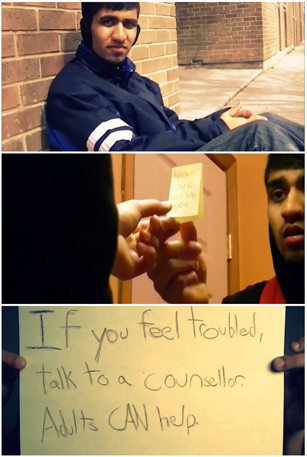
A second stand-out presentation involved a young man practicing 22 acts of kindness for his 22nd birthday, giving acts of kindness rather than receiving them. The video is breathtaking, well cut, with an amazing soundtrack. It is effective at highlighting generosity and heartfelt gifts. I played the video for my classes and as we spent time discussing acts of kindness, I could feel the atmosphere in the room soften.
The last remarkable presentation highlighted that Peel Region is a human trafficking hotspot in Canada. Peel Regional Police Detective David van Allen said of the 60 human trafficking cases that have been reported in Canada, 31 have been Peel police investigations. Constable Jim Zucchero, who investigates human trafficking for Peel OPP, said pimps use Highway 401 and the QEW to move women from Windsor up through Montreal. And since human trafficking victims are high school age, ranging from 12 to 22, I find that I spend more time reflecting on the choices some of my personally "adopted" students take, and further the consequences that these choices may have on their future.
That's it. Five minutes can change your life.
Information
More about shadeism here: http://shadeism.com/, http://vimeo.com/16210769
Random Acts of Kindness video by searching "22 Random Acts of Kindness" on Youtube (http://www.youtube.com/watch?v=wskG18saKk0)
Read about Human Trafficking in Peel Region here: http://www.mississauga.com/news/article/1349888--i-d-like-to-see-the-mayor-sitting-at-that-table
Tuesday, 30 April 2013
Integrating Technology - the SAMR model

- Substitution - technology is a direct tool substitute, does not change the task
- Augmentation - new technology is a direct tool substitute that ends up enhancing the task
- Modification - the task is redesigned o take advantage of the capabilities of the new technology
- Redefinition - a new task is made possible by the capability of the new technology
It can be said that as a task progresses through the four stages of SAMR technology integration, the task starts to allow students to work at progressively higher levels of Bloom's Taxonomy. After all, the goal of integrating technology is to enable richer learning, enabling students to engage their community, both in the school and further.
Students research articles online, summarizing the article and explaining the meaning of the statistics therein. Students create a realistic numerical problem that uses the information gathered from the article.
Students research articles with statistics, then create an infographic that highlights statistics in an interesting and probing manner, they post their article summary and infographic to the class blog for other class members to comment.
If you would like to start blogging with your class, kidblog.org and edublogs.org are two great sites that allow you to create generic student accounts and use a variety of control measures including enabling moderation (the monitoring of comments and/or posts before they are viewed by a public).
Infographics are images that convey data in a sophisticated and influential way. There are a lot of free websites that allow can make them easily via the computer. Take a peek at these sites:
Saturday, 27 April 2013
Share Your Care

Andy is perhaps is the most widely traveled school speaker I've listened to: he's visited a lot of high schools across Canada. I lived abroad in Europe for a number of years and I sincerely appreciate that diversity and similarity coexist without contradiction.
- join a club or team that their friends aren't part of
- stay behind to ask for extra help
- make a new friend outside their peer group
- admit enjoyment of an unpopular hobby
As a follow-up with my class I discussed this fantastic video:
Syed Muzamil Hasan Zaidi - 22 Random Acts of Kindness
Speaker Information:
Andy Thibodeau - http://www.andypresentations.com
Subscribe to:
Posts (Atom)